Cleveland Cavaliers

I currently work as the Basketball Systems UI/UX Designer for the Cleveland Cavaliers, and while all of that work is confidential, I have provided short sanitized project descriptions here, and can provide more in-depth sanitized case studies upon request!

Selected Projects

Streamlined player-staff communication application

Originally scoped for players, expanded after testing to include coaches and building staff, across both NBA and G League Levels.

The Problem: Communication was scattered across too many platforms, leading to missed messages and overwhelmed players, alongside a need to give players 24/7 self-service access to their own film and stats.

Process:

  • Mapped existing communication channels and interviewed players and staff on habits and frustrations with current tools
  • Benchmarked other sports team communication apps, then prototyped and tested extensively with players and staff

Decisions

  • Expanded to include coaches and staff as content creators after player interviews showed adoption would stall without them actively posting and engaging
  • Kept legacy content-creation workflows intact by building API integrations with existing vendor tools, rather than forcing long-tenured staff to switch systems overnight

Outcome: Adopted across both team levels, consolidating communication onto fewer platforms and giving players direct, self-service access to team-provided film and stats for the first time.
Agent-Ready Design System

Created a design-system reference layer enabling non-designers and developers to explore product concepts through agentic coding tools.

The Problem: Agents could reproduce established patterns inconsistently or improvise poor design decisions, while overly rigid rules risked suppressing useful experimentation.

Process:

  • Tested agent-generated interfaces repeatedly, identifying failures across components, responsiveness, accessibility, visual language, and interaction patterns
  • Released the system to independent testers, using divergent prompting styles to uncover failures I had learned to anticipate

Decisions

  • Separated established patterns from experimentation: existing components were protected, while novel needs received a defined process for responsible invention
  • Encoded design rationale alongside constraints, steering agents toward accessible alternatives rather than simply blocking undesirable design decisions

Outcome: Generated interfaces now consistently use centralized components and variables while remaining capable of creating novel patterns when needed.
Conversational search for a video tool

Built for players, coaches, and staff who needed to search a large, filter-heavy video database without training or documentation.

The Problem: The existing filter system required extensive onboarding to use effectively, creating a real barrier for players and new staff.

Process:

  • Interviewed and surveyed staff across experience levels to map comfort with the existing tool
  • Benchmarked other LLM-driven search patterns for query suggestions, filter detection, and error handling

Decisions

  • Designed natural-language search to remove the step of manually mapping intent to filters
  • Shipped as an optional, collapsible mode alongside the existing tool to protect current users while gathering real usage data before wider rollout

Outcome: Cut typical search time roughly in half and let players query the database independently for the first time.
Multi-entity comparison dashboard

Used by coaches preparing for upcoming games, and front office staff conducting longer-term trend evaluation and in-season reporting.

The Problem: Comparisons happened manually across separate dashboards, making it hard to spot key differences, surface correlations, or track a team's change over time.

Process:

  • Observed users narrating their process through the existing two-tab workaround, then gathered their expectations for an ideal view
  • Benchmarked comparison patterns in other sports tools, then simplified through repeated testing to remove intimidation factor

Decisions

  • Chose single-stat comparison over multi-stat display after testing showed multiple stats at once was mentally overwhelming for most use cases
  • Used aggressive progressive disclosure — collapsing most content behind an overview and trend graph — since a second team made the same data feel intimidating

Outcome: Adopted as the go-to comparison tool across the user base, with users reporting significant time savings.
Internal Design System

Inherited a fragmented product ecosystem where designers and developers lacked a shared source of truth for visual and interaction patterns.

The Problem: Inconsistent components, styling, and undocumented usage patterns created unnecessary design decisions and made implementation less predictable.

Process:

  • Audited existing patterns and usage to consolidate unnecessary variations and identify foundational inconsistencies
  • Expanded and documented reusable components, variables, and interaction guidelines around the ecosystem’s recurring needs

Decisions

  • Established the system around existing products first, prioritizing consistency and adoption over a disruptive system-wide redesign
  • Partnered with frontend development to connect design components with an accessible implementation library and shared source of truth

Outcome: The expanded library now covers most recurring needs, accelerating new-page production while maintaining consistent visual and interaction patterns.

Other work I do

Design Support

I jump into whatever needs designing, from quick prototypes and visual systems to new product concepts.

Dashboard Design

I turn complex information into dashboards that are easy to scan, understand, and actually use.

Immersive Design

I assist in the design and prototyping of immersive experiences, translating interaction patterns into spatial and emerging interfaces.

User Research

I talk to users, observe how they work, and turn what I learn into better product decisions.

QA

I catch the visual, interaction, and usability details that can make a good product feel unfinished.
Explore other topics

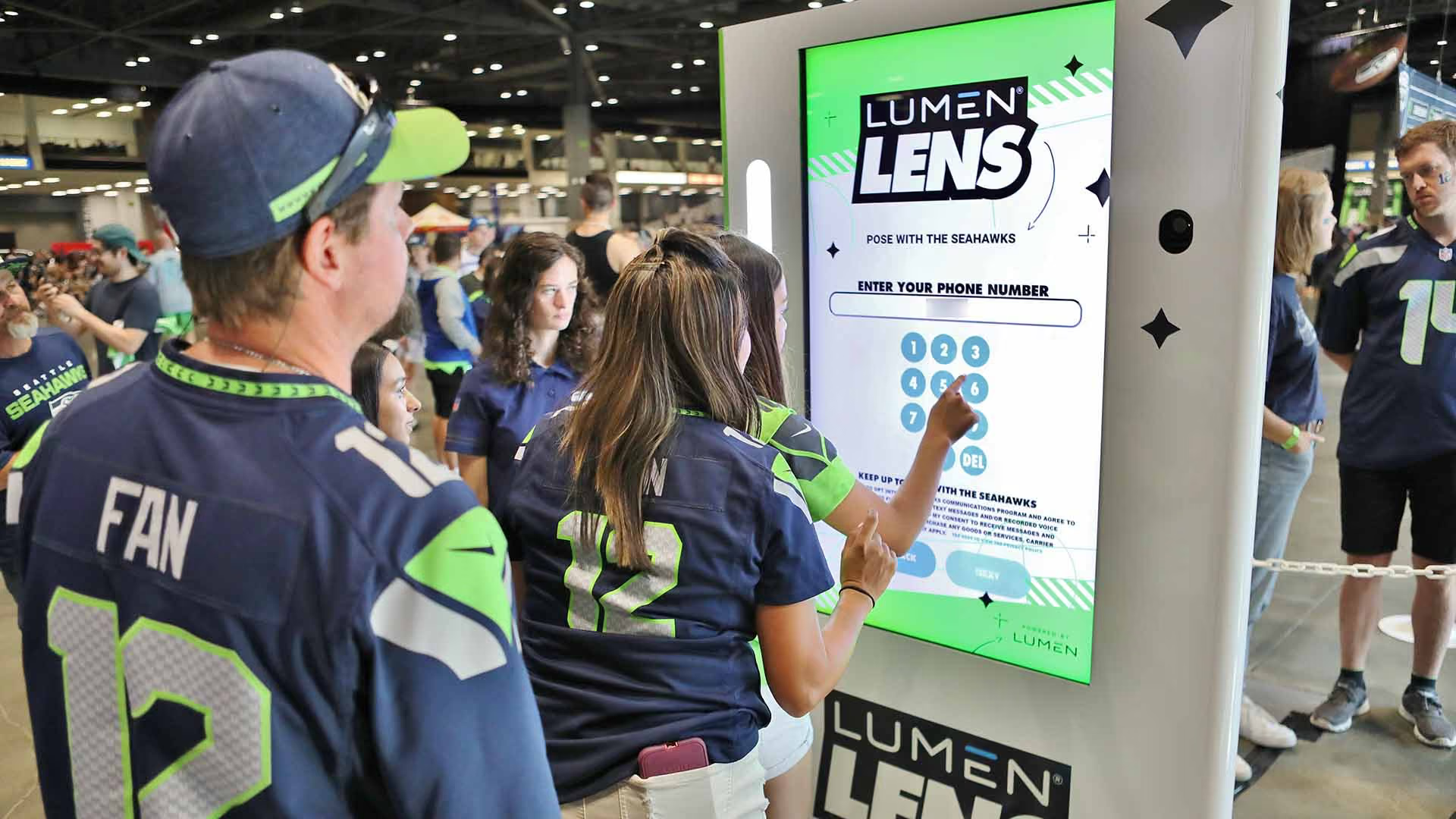
Fans using a Lumen Lens kiosk.

Interactive Experiences

See the physical interfaces, games, and participatory experiences I've designed that bring friends and family together.

View Projects
An illustration of children thinking.

Research

I've completed research on various topics in the world of user experience design - new research methods, how child-computer interaction can shape the future of UX, and how best to conduct research with minor participants.

Learn More